A container starts without its credential
Symptom
The container runs and the application reports an empty password, a missing API key, or an authentication failure against something it depends on. The deployment itself looks healthy.
Diagnose
- Does the deployment still reference the credential?
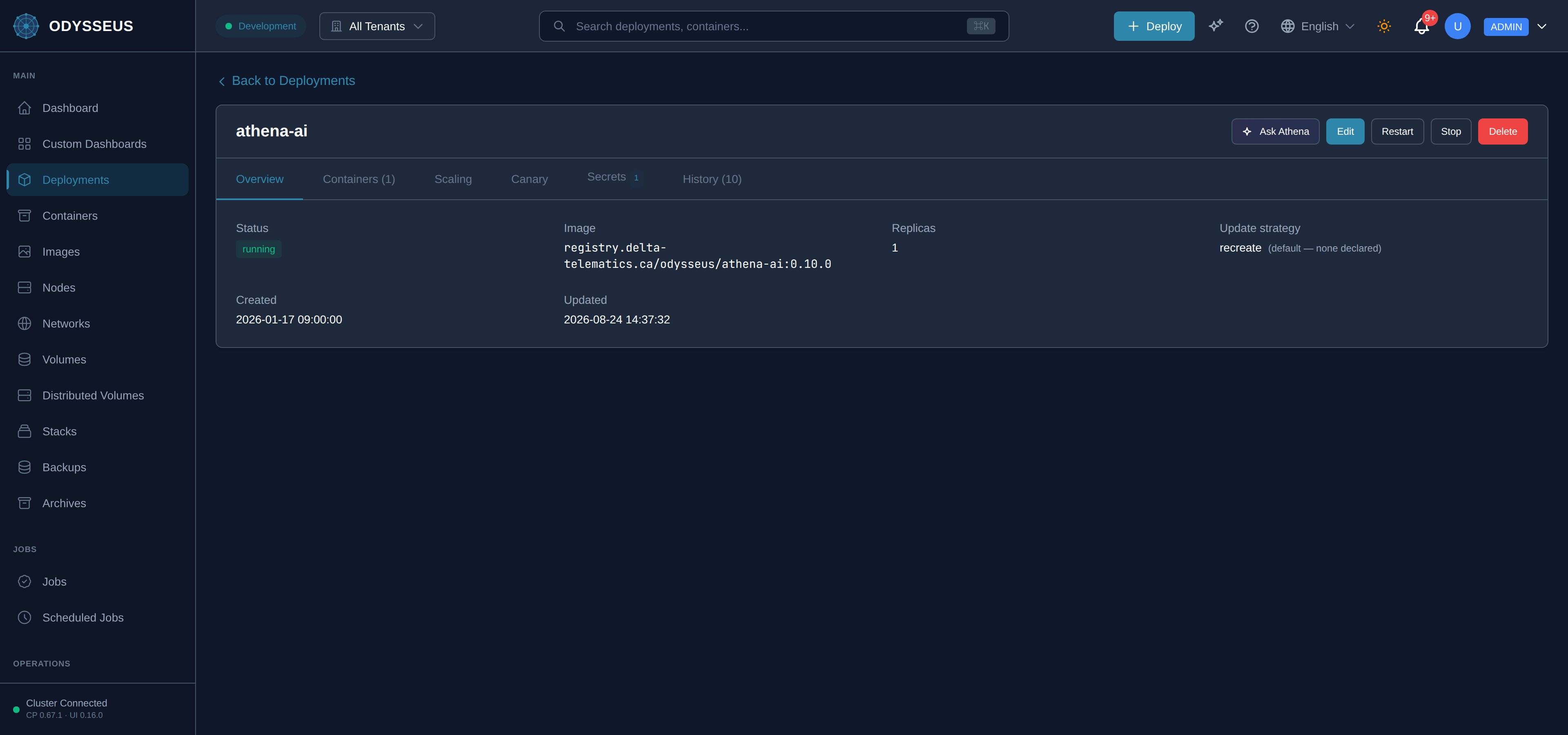
GET /api/v1/deployments/{name}and read thesecretslist. An update that sent a shorter list replaced the stored one — sending a field replaces it outright, and a lost reference removes the credential without failing anything. See sending part of a description. - Is the path the one that holds the material?
GET /api/v1/secrets/resourceslists every path referenced in your tenant, andGET /api/v1/secrets/resources/{name}/consumersshows who reads each one. - Are the keys the ones the application expects? Delivery is by environment variable, keyed as the stored document is keyed. A key named differently in the document is a different variable.
- Was the container created before the material existed? The value is resolved when the container is created, so material written afterwards reaches the next container, not this one.
Resolve
- Reference lost: send the whole
secretslist again, including the entry that disappeared. - Wrong path or wrong key: correct it. Every refusal a path can earn is in rejections and alterations.
- Material added after the container: rotate, or make any change that replaces the container, so the value is resolved again.
- Expecting a file: delivery is env-only and a request to mount is refused. Render the file from the environment in your own entrypoint — see give a deployment a credential.
Prevent
Read the stored list before sending a partial update, and name credentials after what they belong to so two deployments cannot end up reading two copies of one password.